

-
Planning & Consulting

Planning and Consulting
Expert insight helps lower your risk and reduce costs -- a direct benefit to your bottom line.
- True:SCADA

Optimize PV and BESS Performance
Better for the Owner! Better for the Integrator! Better for the Grid!
- CAISO & Interconnection

CAISO & Interconnection
End-to-end guidance from experts who have guided over 900 resources to successful grid connection.
- Support & Data

Support and data services for operational integrity
The Trimark Operations Center (TOC) helps you maintain compliance and ensure accurate data.
- Academy

Trimark Academy
A Comprehensive Training Ecosystem for Power Industry Professionals
- OCC

Operational Control Center (OCC)
Trimarkl's OCC delivers NERC-compliant monitoring, alarm response, dispatch, and failover capabilities.
- Products & Services

Trimark's Comprehensive Set of Systems and Services
We've got you covered with Services from concept to commissioning and Products from panel to the point of interconnect.

Realtime Operation Control Center (OCC)
Operate with Confidence
Trimark’s Realtime Operation Control Center (OCC) provides asset owners with reliable, 24/7/365 operational control of PV, BESS, and other resources. Trimark’s OCC simplifies real-time monitoring, rapid alarm response, compliant dispatch execution, and failover capabilities without the cost or complexity of building an in-house control center.
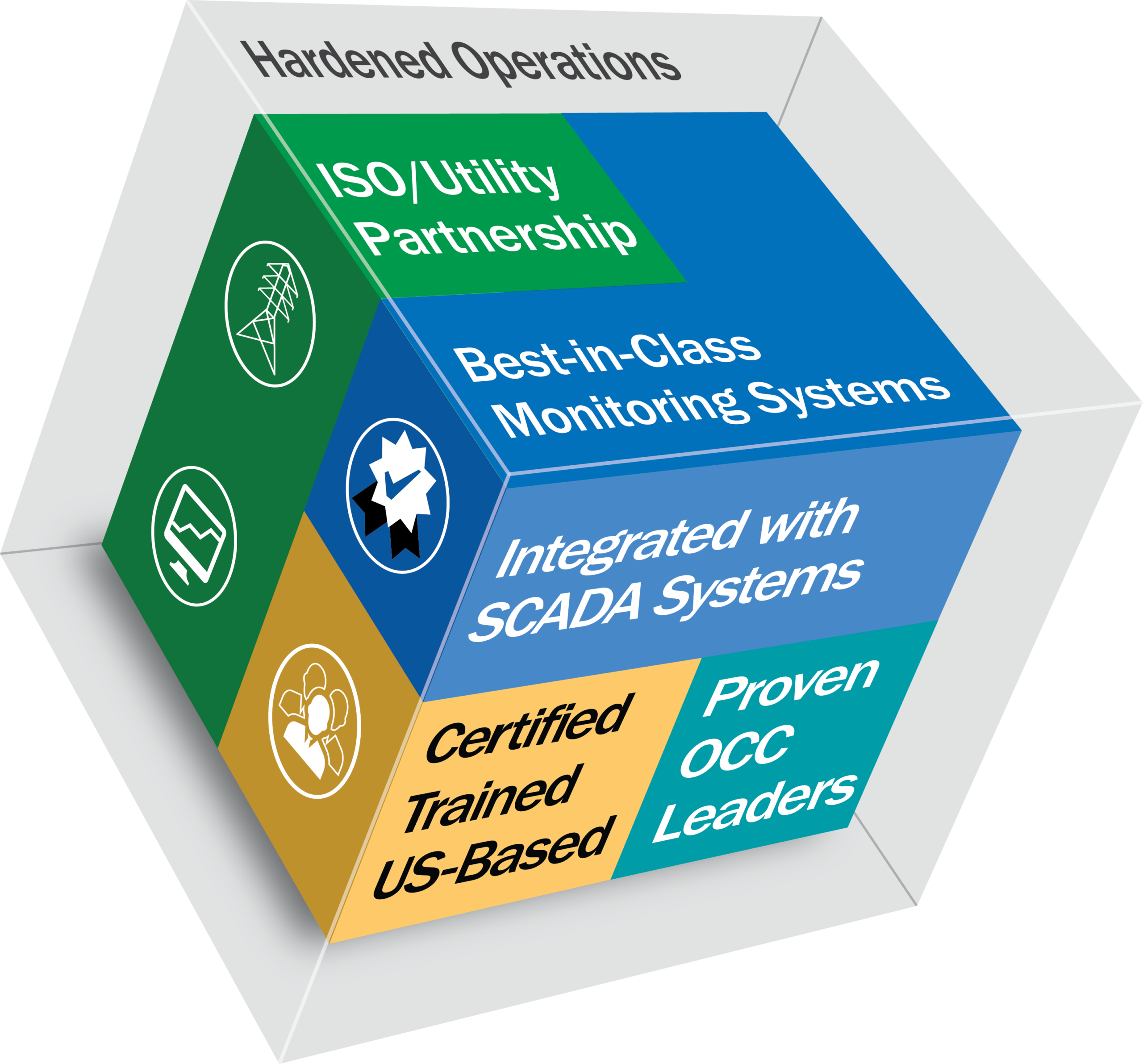
Trimark OCC Overview
Download the GuideMeet NERC’s Physical and Cyber security standards for Low Impact OCC.
Support grid stability with imperative controls and real time action.
Industry standard IT systems normalize controls and support required documentation.
Trimark’s team has the training, experience, and certifications required to meet NERC standards and practices.
Keep Dispatches on Track
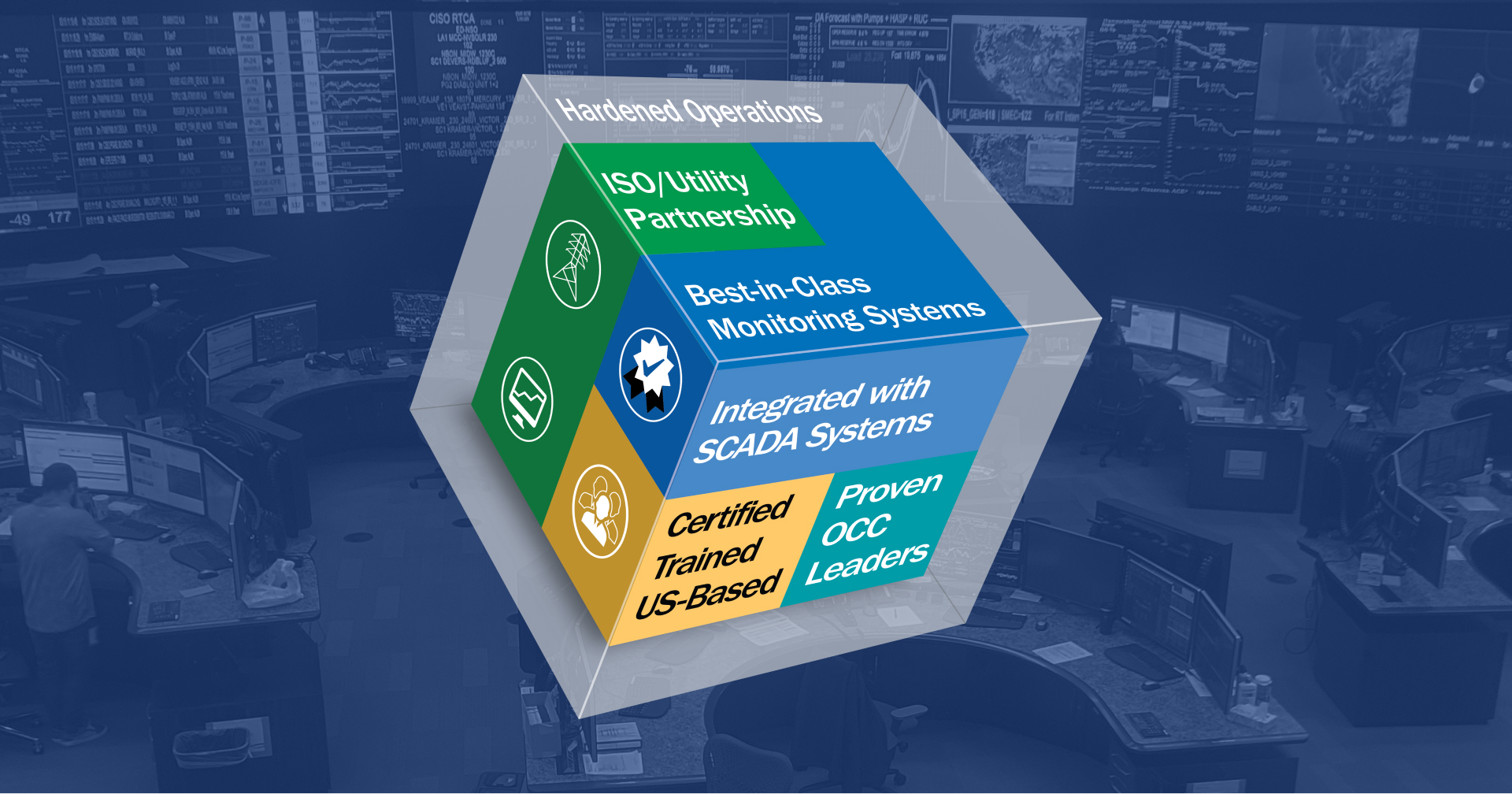
Trimark’s OCC integrates with your SCADA platform, supports operations from commissioning forward, and meets applicable NERC and grid requirements. This solution reduces risk, improves responsiveness, and ensures dispatch compliance.
Baked In Expertise
Trimark’s OCC is built on a solid foundation of proven experience, training and certification.
Trimark’s team has developed several successful OCC’s. They are now applying that knowledge to address new challenges and market opportunities.
OCC At A Glance
Real-time monitoring, control, alarm response, validation and execution of plant operations
Operations management of “Low Impact” and “No Impact” PV generation and battery storage resources
Recognize, prioritize, and acknowledge alarms and actions
Perform non-automated control functions (e.g. preemptive actions to mitigate voltage excursions)
Failover option as an automation back stop (e.g. intermittent device connectivity requires manual failover intervention)
24/7/365 operations serving North America (US, Canada, Mexico)
NERC-Certified Operators
What can the OCC accomplish in 30 Seconds?
This infographic includes a timeline that explains core OCC functions, the critical alarm-response timeline, and why your resource needs an OCC right from the beginning.
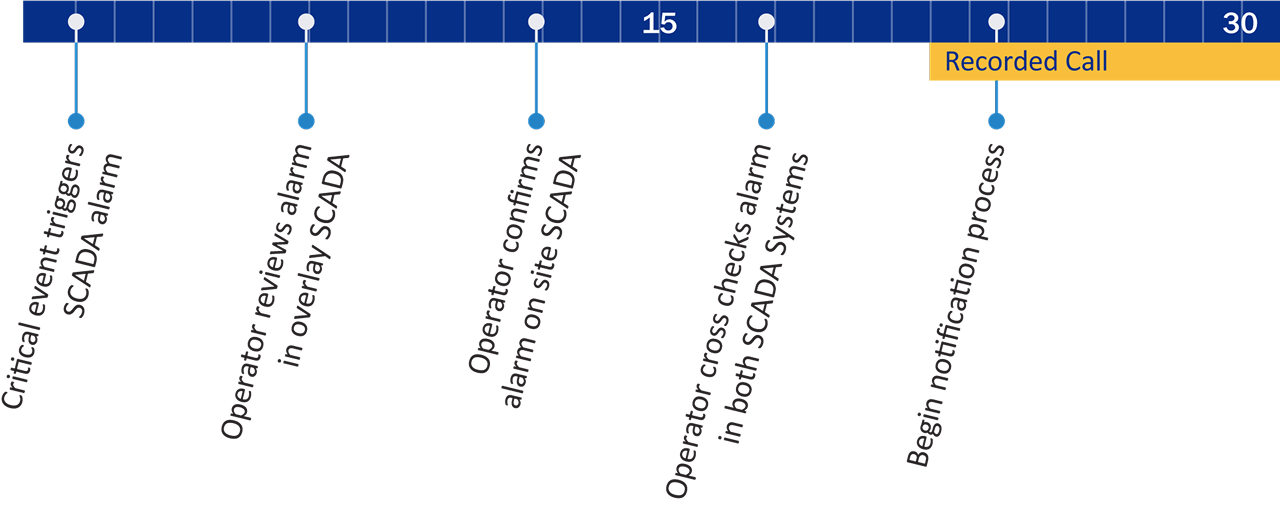
Example Operator Responses
Depending on the alarm, the ISO, TOP, or market scheduler may direct the OCC Operator to:
- Curtail resource
- Provide manual telemetry (phone/email)
- Conduct controlled restart if permissible
- Manually return voltage to compliance
OCC Operator and Compliance Manager will:
- Log deviation event and reason
- Assemble Audit package with alarm detail, recordings, and related data
- Open maintenance ticket (if applicable)
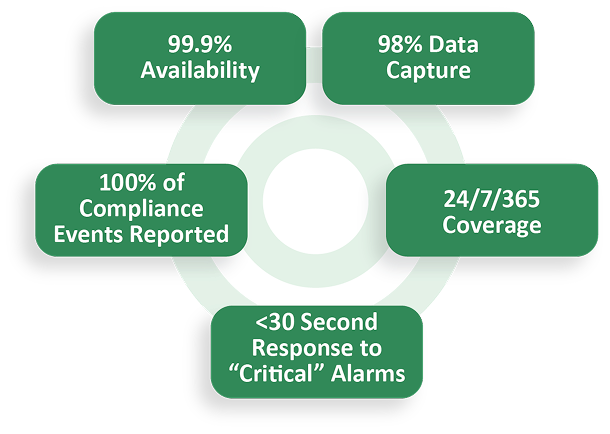
OCC Performance Targets
As mandated by regulations, Trimark’s OCC is built to meet strict performance targets.
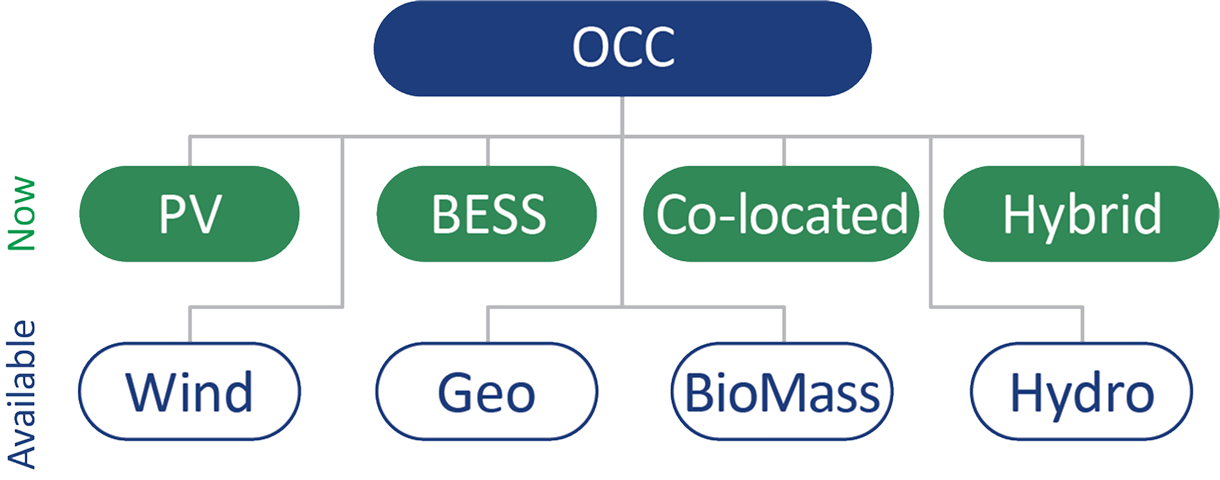
OCC Focus
Trimark’s OCC supports a variety of renewable power resources.
Support Throughout Your Resource’s Life
Your OCC provides mission-critical support at every stage resource’s life. To maintain regulatory compliance, OCC functions must be available from the time of energy back feed thru ongoing operations, as long as the site is connected to the grid.

Development
Planning ensures your OCC is contracted and ready for operations

Construction
OCC supports required control and monitoring during energization

Operations
Support grid stability and meet regulatory requirements
Core OCC Capabilities
Trimark’s OCC delivers a unified set of functions to support regulatory mandates and effective operational practices.
Function
Details
Real-Time Monitoring & Dispatch
24/7/365 asset oversight, respond to grid/operator signals
Compliance
NERC, regional and contractual standards, event logging
Alarm / Event Management
Detect/respond to trips, curtailments, remote resets
Remote Control
Start / stop, change operating modes/setpoints, regulate
Communications
ISO/RTO instructions, owner notifications, outage logs
Cyber & Physical Security
Baseline NERC-CIP controls, monitor access
Performance Optimization
Analytics, KPI reporting, and maintenance tracking
Outage Restoration
Manage safe shutdown/start-up, coordinate repairs
Documentation
Comprehensive log keeping for audits and review
Get Started
Get Started Now!Each resource comes with its own unique set of challenges including integration and operational requirements. Trimark will work with you to understand your specific challenges, integrate your system into our Operation Center, and perform required efforts.
Stay Compliant with Confidence
Trimark’s operational and regulatory compliant OCC includes a range of functions. Some, like security, are mandatory. Others can be adjusted according to your resource requirements.
-
Common NERC Standards for GOPs
Standard
Description
EOP-004, EOP-005
Event and system restoration procedures.
IRO-001, TOP-001
Reliability and operational responsibilities.
CIP-003
Cybersecurity Management Controls (low-impact measures).
COM-002
Communications protocols and reliability.
-
Common Alarm Priorities and Actions
Priority
Alarm
Action
Critical
POI Voltage High-High (>1.05 pu for >30s)
Check Voltage Control screen; confirm VVC enabled; adjust setpoint within TOP schedule; if unable, reduce Q output; coordinate with TOP immediately; log.
Critical
ICCP Link Down to REGIONAL ENTITY (>2 minutes)
Check Comms screen; failover to backup link; notify REGIONAL ENTITY/QSE; provide manual telemetry (phone/email) if required; open telecom ticket; update every 30 minutes until restored.
Critical
BESS Fire/Gas Detection
Place resource in safe state (stop charge/discharge); notify site O&M and emergency services per site ERP; notify QSE/TO/TOP; do not re-energize until cleared.
High
PV Inverter Group Trip (>X MW)
Verify irradiance/wind; check protection trips; attempt controlled restart if permissible and no active faults; notify QSE of capacity impact.
High
Voltage Control Disabled Unexpectedly
Attempt to re-enable; if not possible, switch to PF mode within TOP guidance; notify TOP; log deviation and reason.
High
SoC Low-Low (<10%) or High-High (>95%)
Coordinate with QSE to adjust schedules; set SoC protection limits; if within REGIONAL ENTITY ancillary commitments, escalate for dispatch modification.
-
Real-Time Operations & Asset Monitoring
24/7/365 Monitoring: Supervise PV and BESS assets including generation, state-of-charge, equipment health, and weather/environmental factors.
SCADA System Operation: Real-time visibility and control.
Setpoints and Dispatch: Execute operational setpoints, respond to automatic generation control (AGC) dispatch, and follow directives from the ISO, TOP, and market schedulers.
-
NERC & Interconnection Compliance
NERC Standards: Meet NERC Reliability Standards for Low-Impact Bulk Electric System cyber assets.
Data Logging and Retention: Log events and disturbances required for audit and regulatory review.
Reporting: Report events, outages, and anomalies to utilities, ISO, TOP, and market schedulers.
-
Alarm & Event Management
Alarm Response: Detect and act on alarms, alerts, and critical events.
Troubleshooting and Coordination: Initiate troubleshooting and corrective action with field technicians and developers/owners.
-
Remote Control and Command Execution
Remote Start/Stop: Initiate, curtail, or shut down inverters or the facility.
Mode Transfers: Switch operational modes (e.g., local/remote, grid-following vs. grid-forming for BESS).
Setpoint Adjustments: Change real/reactive, power factor, voltage regulation, or ancillary service settings per market or grid instructions.
-
Communications Interface
ISO/RTO Coordination: Point of contact for economic dispatch, curtailment, and grid support.
Timely Notifications: Alert tranmission operator, market scheduler, owner, and field crews regarding operational changes, emergencies, or maintenance.
-
Cybersecurity & Physical Security Oversight
Implement Baseline Security Controls: Enforce required cybersecurity practices for Low-Impact BCA (Bulk Electric System Cyber Assets) under NERC CIP low-impact criteria.
Access Management: Control and monitor physical and system access.
-
Performance Optimization & Data Analysis
Performance Monitoring: Implement owner’s resource KPIs to facilitate analysis of asset performance deviations, underperformance, or degradation.
-
Outage Coordination & Restoration
Planned/Unplanned Outages: Coordinate and manage scheduled and forced outages to support safe isolation and restoration.
Restoration Support: Optimize efforts to restore service quickly and safely after incidents.
-
Reporting, Documentation, & Recordkeeping
Operational Records: Document all control center actions, equipment changes, and communications.
Regulatory Filings: Prepare required reports for NERC, FERC, or other authorities as applicable.
The OCC supports NERC Regulatory Compliance for the Generator Operator (GOP) entity by collecting, reviewing, classifying, securely storing, and providing compliance-related data and information in accordance with the negotiated contract.
Expert Perspective
Why does their job matter? Trimark team members explain.
Over the last 20 years, we’ve helped over 900 resources navigate CAISO’s NRI. With owners building more utility-scale renewable generation nationwide they’re now asking Trimark to help them comply with PPA and interconnection requirements in ERCOT, MISO, ISO New England, NYSERDA – really anywhere that complex agreements require expert advice.
Jennifer Strand
TCS ManagerI help users put Vantage to work for effective resource management. As a bridge between customers and our software team, I write documentation delivered on every system screen that explains Vantage functions such as controls and reporting. That answers most user’s questions right on the spot.
Rob Towns
Customer Success Program ManagerI develop control software that simplifies the operation of utility-scale solar power generation and energy storage. That’s key to making renewable energy stable, reliable, and viable – which is how we’ll save the world.
Brian Buhl
Principal Software EngineerThe systems we design are a small, but critical, part of power generation. We design the ‘brains’ that monitor and control each resource to be reliable and durable – in some very tough environments. I’m proud to do my part to leave a lasting benefit for society.

Vince Brashear
Director of Engineering and DesignTo avoid chaos and support grid reliability and stability, utility-scale resources must tightly manage Voltage, Frequency, NERC and LGIA requirements. Our control solution allows PV and BESS resources to safely connect to the grid, protect their expensive equipment, and bid into more market opportunities.

Stephen Yee
Director of SCADA Controls
Ready. Set. Letʼs go!
Need a SCADA system that optimizes revenue? Need help meeting interconnection requirements? Want to stay in the market and avoid fines? Weʼve got you!
- © Copyright Trimark Associates, Inc. 2026
- |
- Privacy Policy
- |
- Terms and Conditions
- True:SCADA


